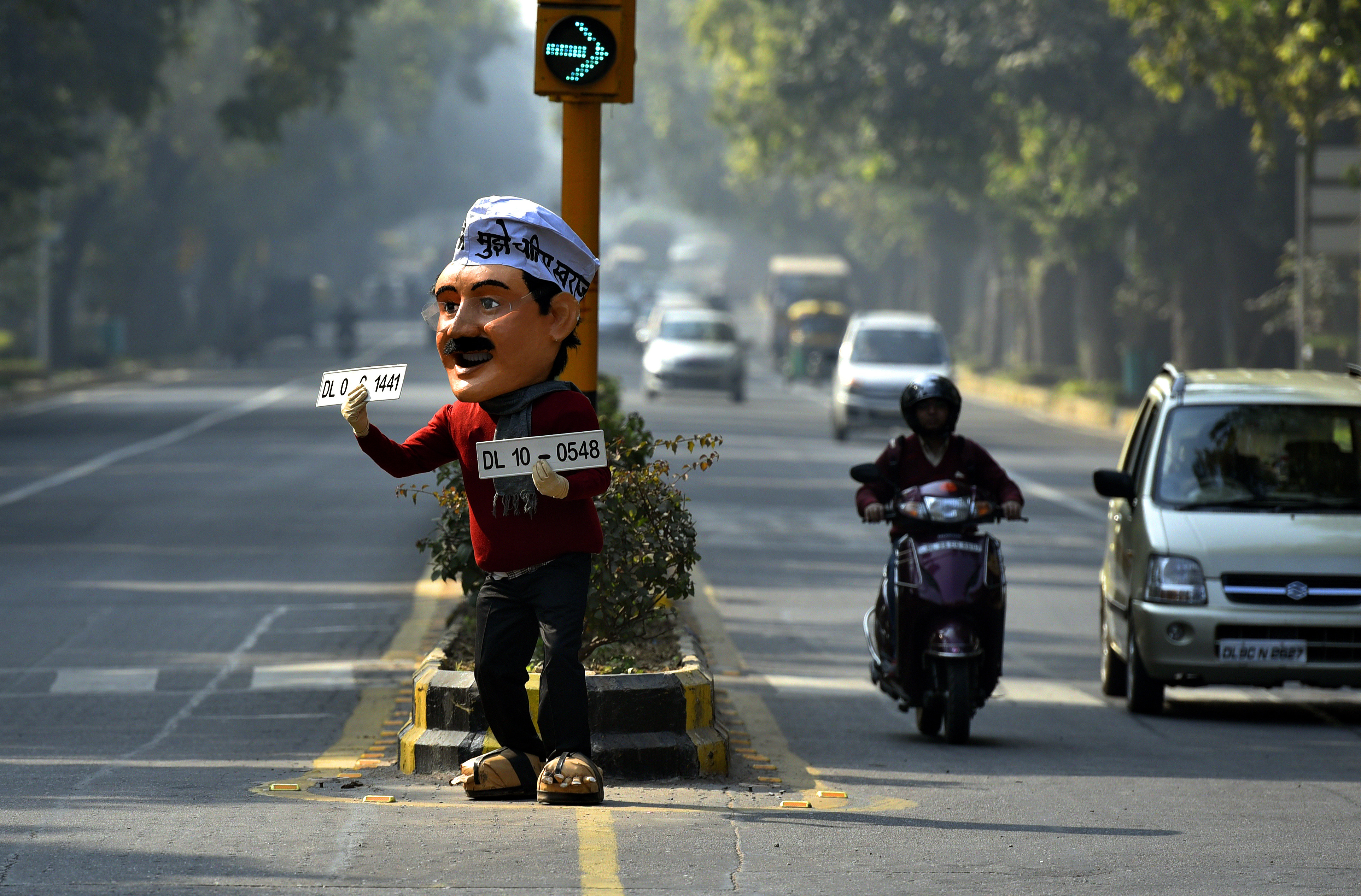
So finally Odd-Even rule on private vehicles was launched on
1st January 2016. As per this rule cars’ numbers ending at 1,3,5,7
and 9 will run on Odd days and cars’ numbers ending at 2,4,6 and 8 will run on even days. Delhi
which has become a Gas chamber due to pollution actually needed something to curb
pollution but will this Odd even formula will get the expected success? However
I really wants this to be successful but following factors can contribute towards
its failure.
To start with, Major pollution sources in Delhi aren’t clear
yet. Construction, Factories, Trucks coming during midnight are one of them. Ironically, none of these will be covered in
the odd-even plan. Without a clear estimate of how much private vehicles
contribute to Delhi’s pollution, making half of them sit idle at all times
seems like an ill-conceived idea.
Next,
we just don’t have the enough traffic police manpower to track adherence. Odd even supporters may believe that people will be good. However, if we were good
people, all of India’s schemes would have worked. There will be legal ways
around the scheme (buy another car for the number plate, often an old, second
hand, more polluting one) or illegal ways (fake an emergency certificate, bribe
the cop, take a chance, switch the number plate). After the initial euphoria
and media trials around the scheme dies, Delhiites will figure out a way to get
their cars on the road.
 For
those who follow the rules, they will end up burdening the already choked
public transport system even more. Autos will either not be available, or will
overcharge. Metros, already packed, will become worse. Delhi doesn’t have
public transport like Paris and Singapore (where such measures were applied,
albeit only on a temporary basis).
For
those who follow the rules, they will end up burdening the already choked
public transport system even more. Autos will either not be available, or will
overcharge. Metros, already packed, will become worse. Delhi doesn’t have
public transport like Paris and Singapore (where such measures were applied,
albeit only on a temporary basis).
Some
supporters of this are giving examples of Beijing wherein this kind of formula
has already got success and they keep on trying it at regular intervals. But
please note that, Beijing is not a democracy, and the plan fits into what an
authoritarian state would do. In democratic India we must think a hundred times
before we steal our people’s freedom. Hence comparison of both cities is
irrational.
Solutions do exist. The long-term solution is to create more
world-class cities like Delhi, to avoid large influx of people coming to Delhi for jobs etc. Delhi also needs a much better public transport system. In the short
term, we can restructure offices with lower taxes to have different work hours,
which will balance out the traffic and make it move faster. As per a study, st car stuck in a
traffic jam pollutes much more than a car that quickly finishes its journey. We
can also raise taxes on purchase of new cars (or limit their numbers) Taxi sharing
apps must be endorsed on a large scale so that they can go a long way in
reducing cars on the roads.
AAP
deserves credit for trying to do something about Delhi’s pollution. Delhi
deserves better air but it also deserves more sensible solutions to achieve the
same.


Its a good initiative taken by AAP but to make it success each individual has to realise that this fight against pollution is for them, for their health, for their own good.. - One initiative taken by you by sharing this great thought. NICE !!!!
ReplyDeleteThank you Nisha for your valuable feedback. Appreciated. :)
ReplyDelete